
CrossFit vs. Hyrox Training: Why Functional Fitness Builds the Stronger Long-Term Athlete
Quick answer: CrossFit is one of the most effective ways to train for Hyrox because it builds the exact combination of strength, aerobic capacity, and functional movement skill that Hyrox tests — running, sleds, carries, wall balls, and rowing — while also building broader, more durable fitness that lasts well beyond race day. Hyrox-specific training plans sharpen race performance short-term, but CrossFit builds the underlying athlete year-round.
Hyrox has exploded in popularity over the last few years, and it's easy to see why. The format is simple, the community is welcoming, and the mix of running and functional movements appeals to people who want more than a treadmill and a rack of dumbbells. But if you're searching for the best way to train for Hyrox, you've probably noticed a debate brewing: should you follow a Hyrox-specific training plan, or is CrossFit actually the smarter long-term investment?
Here's our take as a functional fitness gym: CrossFit isn't just good Hyrox prep. It's the more complete, more durable, and more enjoyable way to build the fitness Hyrox demands — and it keeps paying off long after race day.
What Does Hyrox Actually Demand From Your Body?
Hyrox competitions combine 8 x 1km runs with 8 functional workout stations — sled pushes, sled pulls, burpee broad jumps, rowing, farmers carries, lunges, wall balls, and skiing on the SkiErg. To perform well, you need:
Aerobic capacity that holds up under fatigue
Grip and postural strength for carries and pulls
Lower body power for sleds, lunges, and jumps
The ability to keep your heart rate under control while moving through varied, functional movement patterns
That combination — endurance layered on top of strength and skill — is exactly what functional fitness training is built around.
Why Is CrossFit Good Training for Hyrox?
A Hyrox-specific plan trains you to be good at Hyrox. CrossFit trains you to be good at everything Hyrox requires, plus a lot more that transfers into daily life and long-term athletic health.
1. Constantly varied functional movements CrossFit's core principle is functional movements performed at high intensity across a wide range of modalities. Rowing, running, sled work, kettlebells, barbells, gymnastics — CrossFit programming rotates through the exact movement patterns Hyrox tests, so athletes build real proficiency instead of narrow, single-sport conditioning.
2. Strength you can't fake on race day Hyrox is deceptively strength-dependent. Sled pushes and pulls, farmers carries, and wall balls all reward athletes with a real strength base. CrossFit's emphasis on structured strength cycles (squats, deadlifts, presses, pulls) builds that base year-round, not just in the eight weeks before a race.
3. Engine development that doesn't plateau Because CrossFit blends short, high-intensity efforts with longer aerobic pieces, athletes develop a bigger overall engine than pure steady-state runners typically build. That translates directly into faster recovery between Hyrox stations and stronger finishing splits.
4. Built-in injury resilience Single-sport training (just running, just Hyrox simulation) tends to overuse the same joints and movement patterns. CrossFit's varied stimulus spreads load across the whole body, which means fewer overuse injuries and more consistent training over months and years — the real key to long-term performance.
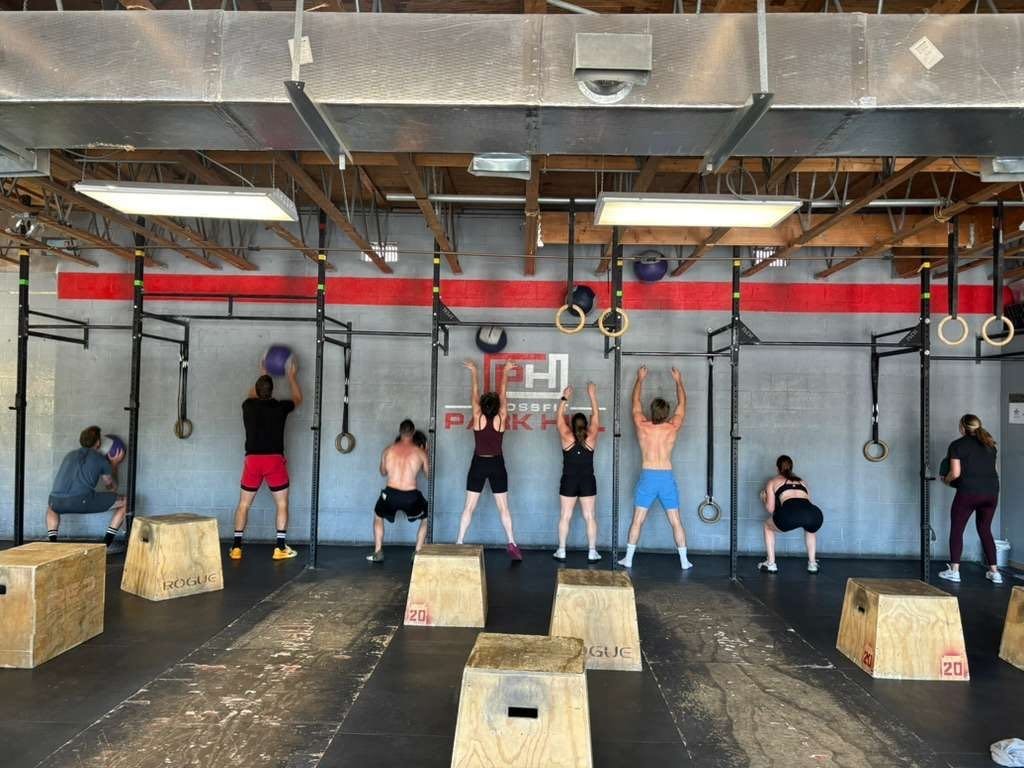
5. A community that keeps you consistent Motivation fades. Community doesn't. CrossFit's class-based, coached environment keeps people showing up long after a race-specific training block would have ended, which matters more for long-term fitness than any single workout.
CrossFit vs. Hyrox-Specific Training: Which Is Better Long-Term?
A dedicated Hyrox training block can absolutely sharpen your race-day performance in the short term. But most Hyrox-specific plans are narrow by design — they're built to peak for one event, not to build a durable, well-rounded athlete.
CrossFit takes the opposite approach: broad, general, and inclusive functional fitness that happens to cover every skill Hyrox tests. Athletes who train CrossFit year-round typically show up to Hyrox races already strong, already conditioned, and already comfortable with the movement patterns — then just add a few weeks of race-specific pacing and station practice before competing.
In other words: CrossFit builds the athlete. Hyrox-specific training just sharpens the tool.
How Do You Use CrossFit to Train for Hyrox?
If you're a CrossFit athlete with a Hyrox race on the calendar, here's how the two fit together:
8–12 weeks out: Start layering in longer aerobic pieces (1km repeats, longer rows/skis) alongside your normal CrossFit programming.
4–6 weeks out: Practice race-specific transitions — running directly into sled work, carries, or wall balls — to train the "compromised running" feeling Hyrox is known for.
Race week: Taper intensity, keep movement quality high, and trust the base you've built.
The functional fitness foundation does the heavy lifting. The race-specific work is just the finishing touch.
Frequently Asked Questions
Is CrossFit good training for Hyrox? Yes. CrossFit's mix of strength, conditioning, and varied functional movement covers nearly every physical demand of a Hyrox race, making it one of the most effective year-round training approaches for Hyrox athletes.
Do I need to switch to Hyrox-specific training before a race? Not entirely. Most CrossFit athletes only need to add 4–8 weeks of race-specific pacing and station practice on top of their existing CrossFit training to be race-ready.
What is "compromised running" in Hyrox? It's the sensation of running with fatigued legs and elevated heart rate immediately after a functional station like sleds or wall balls — a skill best trained by practicing transitions directly, not by running or lifting in isolation.
Is CrossFit or running better Hyrox preparation? Running alone builds aerobic capacity but leaves gaps in strength and station-specific skill. CrossFit builds both the aerobic engine and the strength/skill base Hyrox requires, making it a more complete preparation method on its own.
Train Functional Fitness. Show Up Ready for Anything.
Whether your goal is a faster Hyrox time, a stronger back squat, or just feeling capable in daily life, functional fitness training built on constantly varied movement, measurable intensity, and real community is the training style that keeps delivering results — race season and beyond.
If you're curious how our programming can help you build a long-term engine and get race-ready for Hyrox, come try a class with us. We'll show you what functional fitness training is really capable of.